
The OECD publishes guidance on a number of topics related to responsible business conduct.
In this guidance, the OECD explores the link between responsible business conduct and resilience in global value chains—in the context of the COVID-19 pandemic and climate change.
The guidance provides practical advice on how to build resilience against a wide range of key risks. It also offers recommendations to both governments and companies on how to strengthen policies and practices related to due diligence in global trade and investment, as well as how to build partnerships and trust.
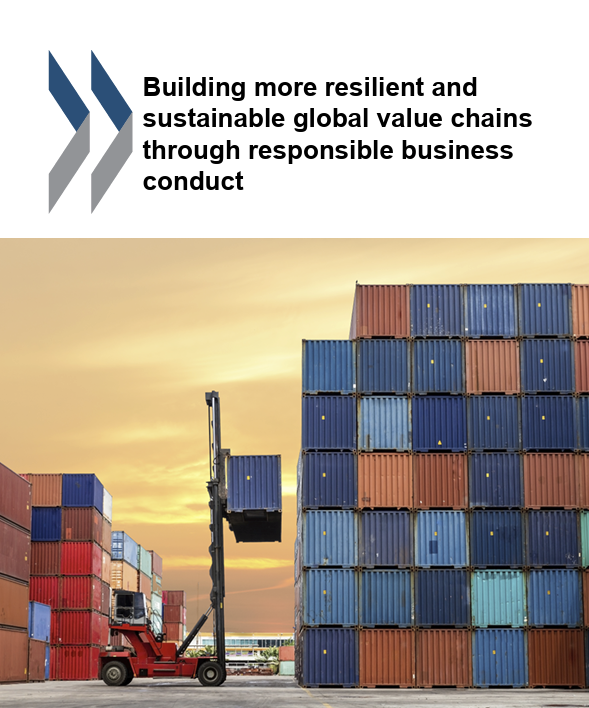
OECD guidance on more resilient and sustainable value chains (several languages)
Public procurement accounts for 12 percent of GDP in OECD countries and can contribute to positive developments across many areas – from climate and the environment to social inequality and economic growth. However, this requires public buyers to conduct risk-based due diligence on par with the private sector.
This guidance provides decision-makers and buyers in the public sector with advice on how to carry out stakeholder engagement and develop good practices for due diligence.
In this guidance, the OECD addresses the worst forms of child labor associated with the extraction, transport, and trade of minerals.
There is limited information on how companies can practically conduct due diligence related to the risk of child labor. This guidance aims to fill that gap, helping companies identify, mitigate, and report on the risk of child labor in their mineral supply chains.
OECD guidance on the worst forms of child labour in mineral supply chains (several languages)
As global demand for critical minerals increases, it will be essential to anticipate and manage the potential harm that the mining and mineral sector can cause to people, the environment, and communities. Overlooking these risks could ultimately hinder the supply of the technologies needed for clean energy production.
Traceability systems can provide important insights as part of a broader risk-based due diligence process.
This report presents a practical eight-step roadmap – from setting policy objectives to building trust – that can help ensure that traceability systems are effective and aligned with the realities of global supply chains.
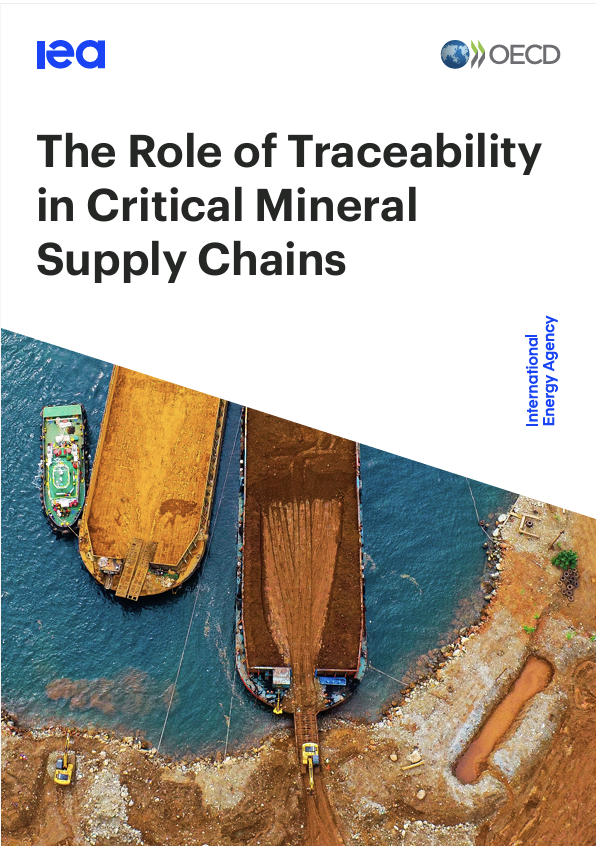
OECD report on traceability in critical mineral supply chains
See our page for sector guidance for additional resources on conflict minerals.
Artificial intelligence and digital technologies have accelerated investment, growth, and innovation in the private sector. Governments must keep pace to promote positive development while also mitigating the risk of adverse impacts.
The OECD has developed a framework for forward-looking governance of emerging technologies, the Framework for Anticipatory Governance of Emerging Technology (2024). This note illustrates how responsible business conduct and the framework can guide governments in addressing the challenges posed by new technologies.
OECD note on governance of emerging technologies
Read more on OECD’s page on technology and responsible business conduct
To develop responsible and trustworthy products and services based on artificial intelligence (AI), companies must identify and manage risks to people, the environment, and society.
This publication provides an overview and analysis of commonalities and differences across leading relevant frameworks for AI risk management. It is part of a broader project aimed at developing a shared understanding of the responsible AI ecosystem and establishing common, government-endorsed guidelines for managing risks associated with trustworthy AI.
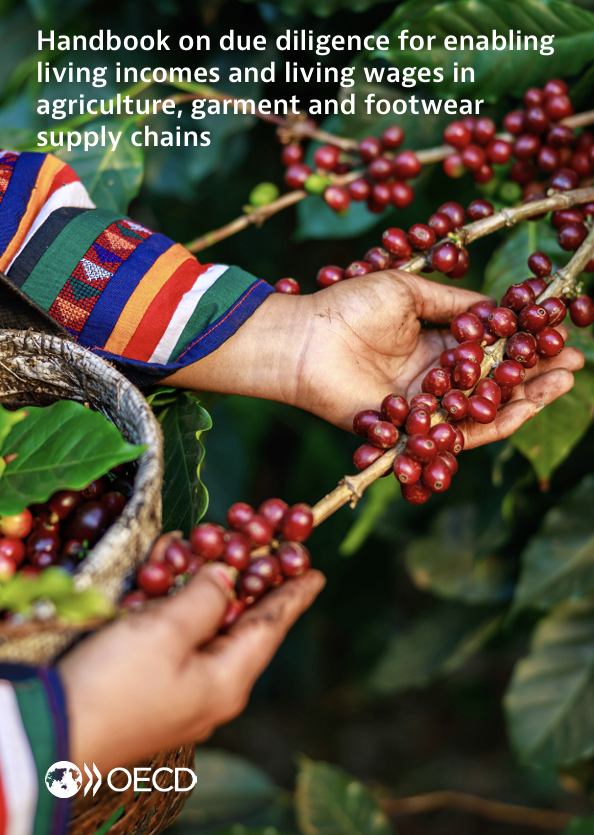
This handbook is a practical guide on how companies can use due diligence to achieve living incomes and living wages in global supply chains.
The handbook focuses on the agriculture, textile, and footwear sectors and builds on existing OECD standards for due diligence in supply chains and responsible business conduct. The recommendations are aligned with the International Labour Organization’s (ILO) concept of a living wage.
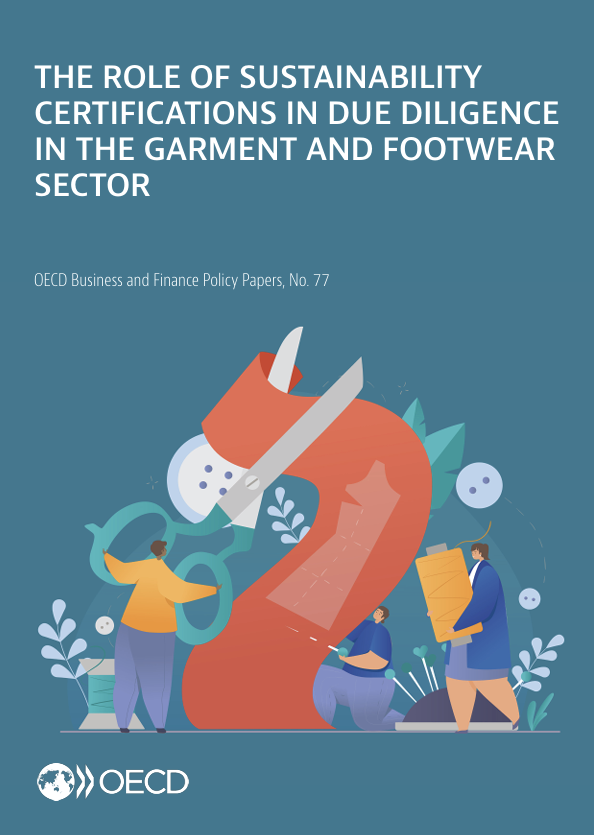
This guidance explores the role that certification schemes can play in due diligence within the textile and footwear industry. It includes both research and practical examples and is also relevant for other sectors.
The OECD also produces sector-specific guidance, providing concrete and practical advice on responsible business conduct and due diligence in various industries.
Due diligence is the cornerstone of responsible business conduct.
Read about what due diligence is and how it can be carried out on the page for due diligence guidance.